


Solange’s Black Punany Power
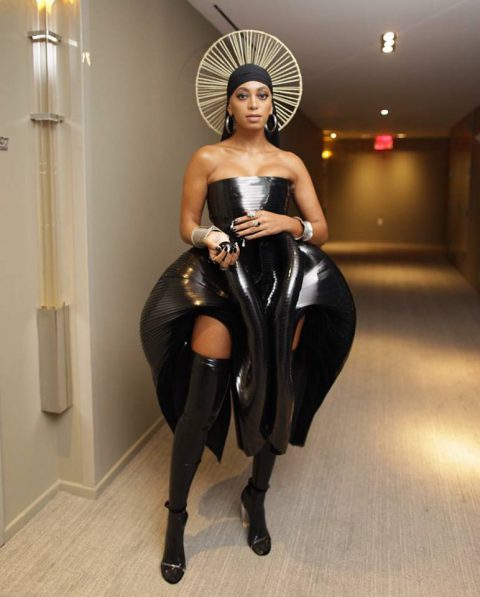
So when men, particularly Black male artists, fly against the wind and do something out of the ordinary we take pause. We lament their confusing shortcomings (Kanye) and celebrate their high shots (Childish Gambino) for weeks, if not months and years (Outkast’s “Aquemini,” Miles Davis’ “Bitches Brew” & Kendrick Lamar’s “To Pimp A Butterfly”). But let a Black woman do some provocative, against the grain ish. Outside of Beyonce, American can’t seem to muster and Read more...
Going On Vacay

Taking a page from the textbooks of students and professors everywhere, theHotness is breaking for the summer. We’ll be back in September. Be fresh. Stay hot!
WoW Festival: Who Owns Our Bodies?

This weekend, I will be one of 128 women to appear at the New York debut of WOW– Women of the World Festival, an international event intended to celebrate women and spark progressive discussion of their rights. Held at the Apollo Theater in Harlem —and open to everyone—the event runs June 11-14 and includes keynotes by Iyanla Vanzant and Naomi Wolf, performances by Macy Gray, Jessica Care Moore, and Toshi Reagon, workshops on Read more...
#CountMeOUT: Wangechi Mutu & Toshi Reagon
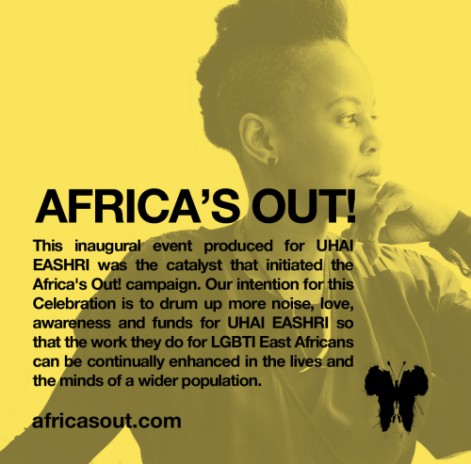
“I am not free while any woman is unfree, even when her shackles are very different from my own.” -Audre Lorde
theHotness celebrates and partners with Black queer women this month in our #CountMeOUT campaign that links African and African-American women– both queer and straight in conversations and hopefully in a movement that expands the ways in which we think about community, activism and sisterhood.
In launching #CountMeOUT, I will present a series of Read more...
Bigger Than Ferguson: My Night Protesting in NYC
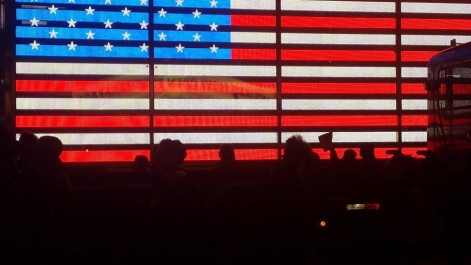
On Monday and Tuesday night I was in the streets marching with #NYC2Ferguson protesters. On Tuesday night I started at 34th St walking looking for my fellow marchers, joined them at 42nd and made it up to 72nd with them chanting with hands up all the way, but by then my feet, thighs and vocal chords were screaming “No Mas” and I was freezing. Oh to be young again I could’ve made it all the
Hearts & Hats: Birth Control 2.0 (Sponsored Post)

This post is sponsored by Bedsider. All opinions are my very own.
“Just keep in mind when Jimmy grows
It grows and grows and grows, so let it
But keep in mind about the epidemic
When Jimmy releases, boy it pleases
But what do you do about all these diseases?
Jimmy is Jimmy, no matter what
So take care of Jimmy cos you know what’s up
Cos now in winter AIDS attacks
So run out Read more...
Our Women’s History Month Celebration
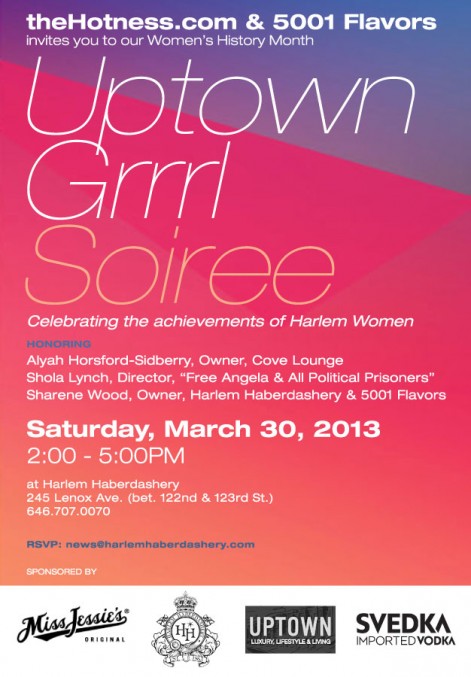
theHotness.com
&
5001 Flavors
invites you to our
Women’s History Month
UPTOWN GRRRL SOIREE
Celebrating the achievements of Harlem women
honoring
Alyah Horsford-Sidberry, Owner, Cove Lounge
Shola Lynch, Director, “Free Angela & All Political Prisoners”
Sharene Wood, Owner, Harlem Haberdashery & 5001 Flavors
Saturday, March 30, 2013
2:00 – 5:00PM
at
Harlem Haberdashery
245 Lenox Ave. (bet. 122nd & 123rd St.)
646.707.0070
RSVP: news@harlemhaberdashery.com
Happy New Year!

Thanks so much for making 2011 the biggest year for theHotness.com. We re-launched the site, saw crazy new highs with traffic and subscribers, made a syndication deal (HuffPost) and had one of our own exclusive FLYASPORA pics make the finals in an international photo contest. 2012 is looking like it’s going to be even bigger! I wish all of you a Happy, Exciting, Healthy and Prosperous New Year.
BE YOUR OWN BEAUTIFUL!
Thanks to Daddy, I’m Every Woman!
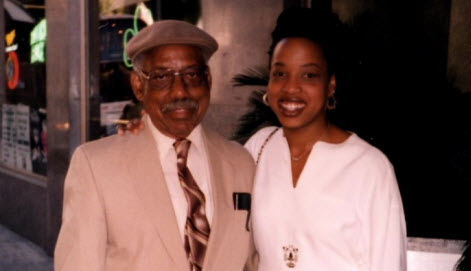
This Father’s Day was my fourth without my dad and to use Oprah’s phrase– What I know for sure— is that Daddy’s Girls never get over the loss of our fathers. I am always so full on Father’s Day. Not sad like that first Father’s Day when I decided to buy flowers to place on my dad’s gravesite. The woman behind the counter was busy helping one woman with her arrangement. She looked up Read more...